The Hope Support Model™
A structured, person-centred and rehabilitation-focused approach to homelessness support.
The Hope Support Model™ was created by Lisa Everett in 2022 and implemented at Hope Housing, Training & Support Ltd as a structured, person-centred and rehabilitation-focused approach to supporting vulnerable adults experiencing homelessness. Developed through Lisa’s many years of frontline experience and professional counselling background, the model has been designed to address not only homelessness itself, but also the complex emotional, mental health and social challenges that often contribute to housing instability. The model identifies and understands that overcoming homelessness involves far more than simply providing accommodation. The Hope Support Model™ was developed to help individuals develop stability, financial stability, improve wellbeing and move towards greater independence through consistent, meaningful and tailored support. Pulling on a structured person-centred and rehabilitation approach for vulnerable adults. The key concept of the model is to improve self-image, build self-esteem, and work on the person you would like to become and to reach self-actualization. The model believes that every person has the ability to grow, develop and reach their full potential. The model delivers unconditional positive regard which results in an individual developing a healthy self-concept. The model emphasises human potential and personal growth, and the importance of self-concept and self-actualization as a natural drive. The model provides empathy, genuineness and acceptance within the support and therapy.
Residents are allocated a dedicated Support Worker who works alongside them throughout their journey providing encouragement, structure, guidance and personalised support based on their individual needs, strengths and goals. Accessing one to one support regularly or daily if required. The model recognises that every person’s journey is different. Many individuals experiencing homelessness face challenges including poor mental health and physical health, addiction, trauma, social isolation, low self-esteem and financial difficulties. The Hope Support Model™ focuses on both immediate practical needs and the underlying emotional issues that may contribute to homelessness and instability.
The heart of the model is a commitment to dignity, empowerment, rehabilitation and long-term recovery. The model enables the resident to build on self-confidence, encourages positive choices, adopt healthy boundaries creating realistic pathways towards independent living.
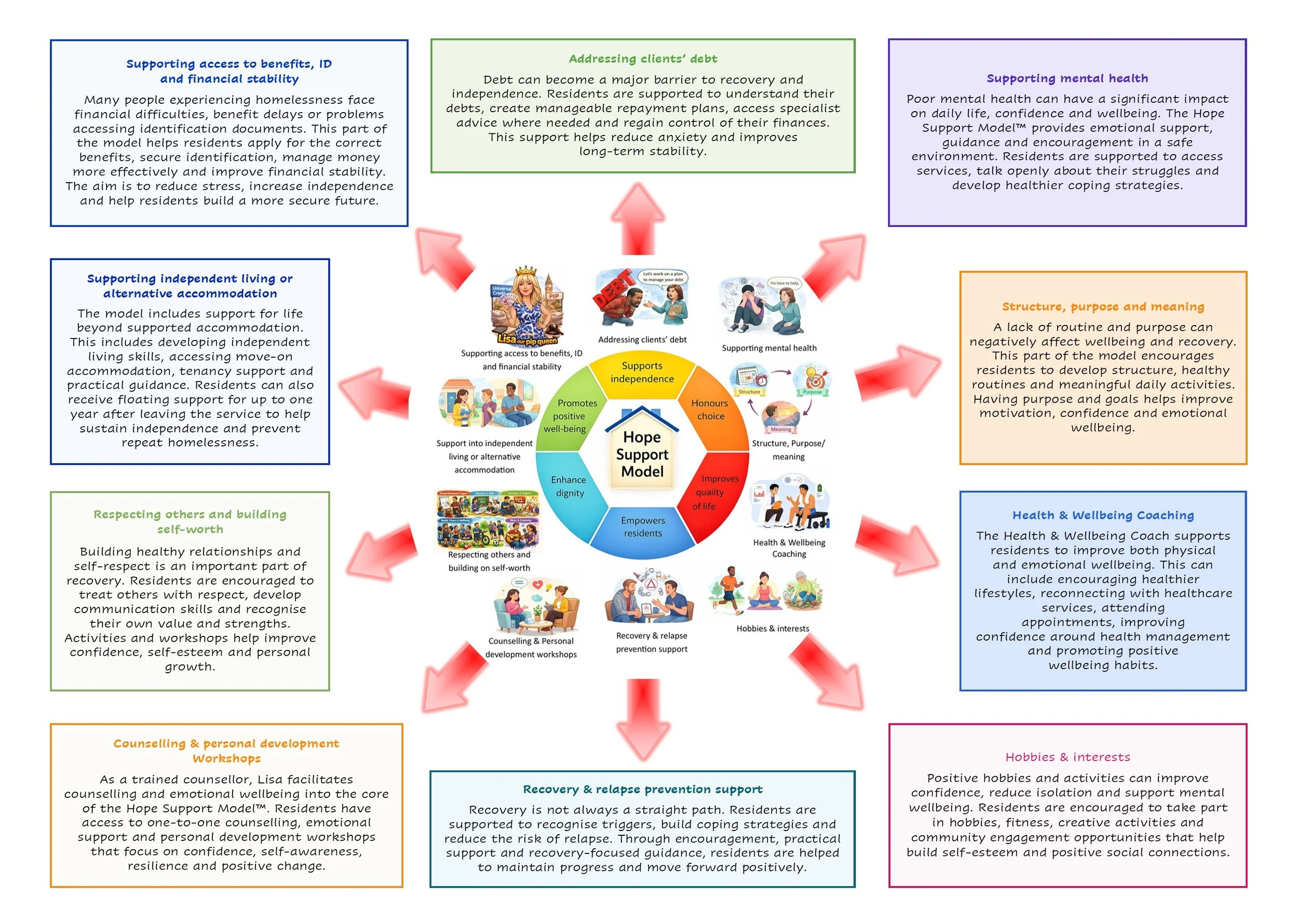
Support is delivered within a safe, structured and recovery-focused environment and includes:
Allocated Support Worker with regular one-to-one support and daily contact where required
Support to access the correct benefits, identification and financial stability
Mental health support and guidance
Health & wellbeing coaching
Structure, routine, purpose and meaningful activities
Hobbies, wellbeing activities and community engagement
Personal development workshops and confidence building
One-to-one counselling and emotional support
Independent living and move-on support
Floating support for up to one year after leaving the service
The Hope Support Model™ promotes positive wellbeing, improves quality of life and empowers residents to take an active role in shaping their future. By combining practical support with emotional wellbeing and personal development, the model helps individuals develop resilience, self-worth and the skills needed to sustain long-term independence. The model also recognises that recovery and personal growth take time, and that not everyone is ready for employment immediately. Before someone can successfully move into work, education or long-term independence, they may first need the opportunity to focus on rebuilding themselves within a safe, structured and supportive environment.
At the centre of “The Hope Support Model™” is the belief that personal wellbeing, emotional stability and confidence are just as important as practical outcomes. Many residents arrive having experienced trauma, addiction, poor mental health, isolation or long periods of instability. For some, the priority is not employment straight away, but learning how to feel safe, stable and hopeful again.
The model supports residents to:
Improve physical, mental and emotional wellbeing
Build confidence and self-worth
Establish healthy daily routines
Access counselling and therapeutic support
Reconnect with healthcare and essential services
Develop life skills and independence
Take part in personal development, education and meaningful activities
Build positive relationships and community connections
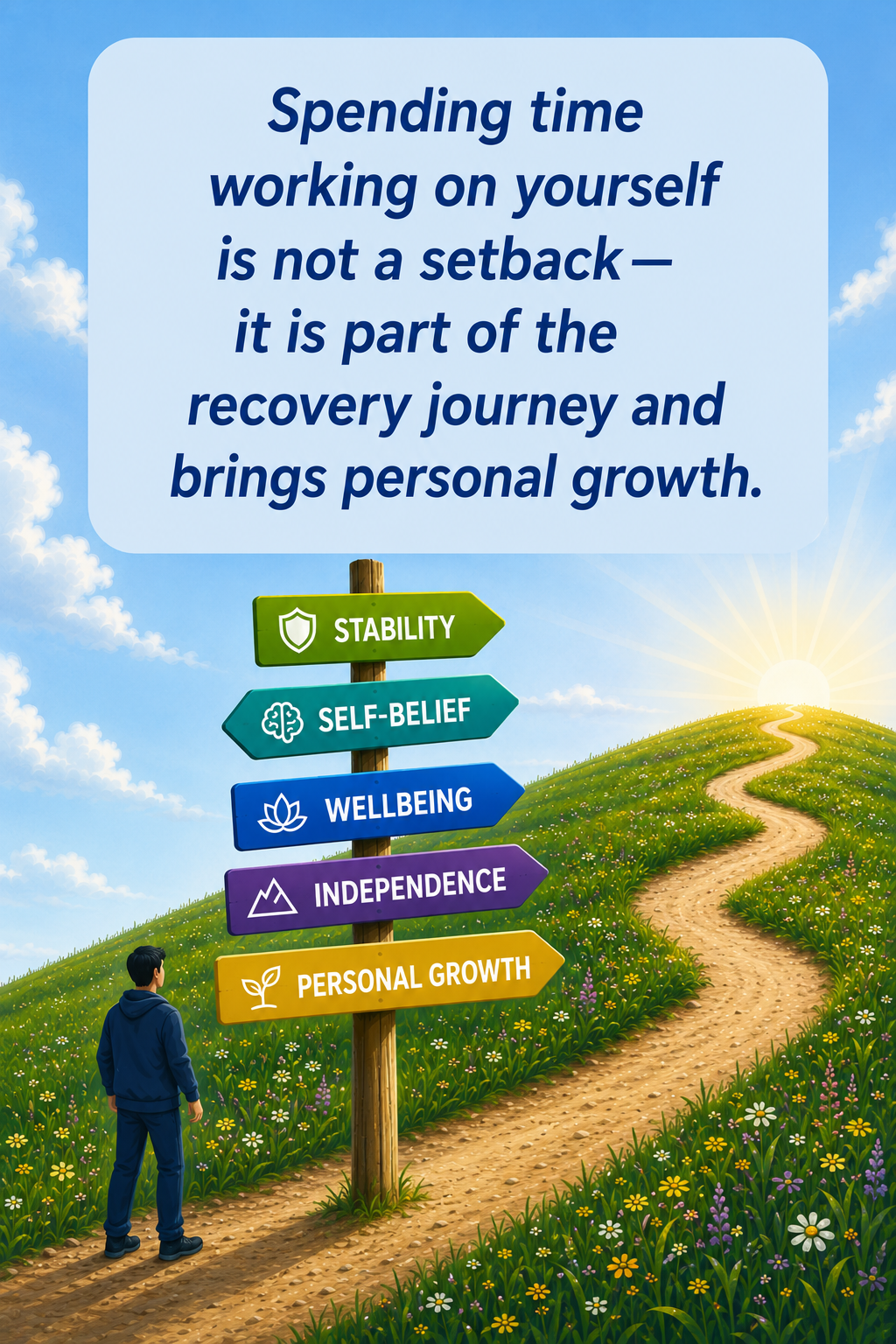
The Hope Support Model™ recognises that spending time working on yourself is not a setback — it is part of the recovery journey. Through one-to-one support, counselling, structured accommodation and personal development opportunities, residents are given the time and support needed to make sustainable progress at their own pace.
Employment can be an important long-term goal, but the model understands that lasting change often begins with stability, self-belief and improved physical health and wellbeing first. By helping residents strengthen these foundations, “The Hope Support Model™” supports individuals towards healthier, more independent and more fulfilling futures. The model is built around respect, consistency and genuine human connection. This Model helps residents move forward positively and rebuild their lives with dignity and purpose.
Evidence the Hope Support Model™ Works
The model supports those with multiple complex needs. These are often associated with addiction, mental health, physical health, trauma and offending. The clear evidence from annual reporting demonstrates the success of the model and the meaningful difference it has made to people's lives. Abstinent accommodation, one-to-one support, counselling and personal development are the core components of this model, alongside a structured framework of wellbeing activities.
The Hope Support Model aims to:
Prevent repeat homelessness
Reduce relapse and self-harming
Stop offending and reoffending behaviour
Improve mental health and emotional wellbeing
Increase tenancy sustainment
Reduce reliance on emergency and crisis services
Reduce reliance on drug and alcohol services, crisis support and NHS services
Improve confidence, independence and life skills
Support long-term recovery and stability
Encourage positive engagement within the community
The Hope Support Model is designed for supported accommodation providers and creates lasting change by supporting individuals to address the underlying causes that lead to homelessness. The model enables residents to build a stable future.